Who we are
We believe that much of the developing world has issues that are possible to solve through a commitment to evidence-based policy that are continually adapted to the constantly evolving needs of the on-ground context. Solving these issues changes the lives of billions of people – not just today, but for our collective future.
That’s why we think that research should have a close relationship to the realities of the communities it serves, and that policy and programme decisions are strongest when they are guided by rigorous, transparent evidence. Our work is built on a commitment to methodological rigour, data integrity, and long-term partnership with the institutions that are as committed to building a culture of data-driven impact as we are.
We provide specialist research, evaluation, and advisory services to academic institutions, government agencies, and impact organisations across India, Nepal, and Bangladesh. While our organisation itself is young, our team brings over two decades of combined experience delivering insight into every stage of the policy pipeline, across sectors including livelihoods, financial inclusion, and gender, climate change, and more. From research design to impact evaluation, our expertise supports the work of policy stakeholders across the world who are looking to make a real, measurable difference to some of the most underserved demographics in the subcontinent.
We believe in people.
Changing people’s lives is at the heart of why we do what we do, and we believe that the best way to make sustainable, long-term impact towards this is to build resilient systems that rely on evidence and rigor to create scalable impact.
Along with our partnerships, we believe that a strong investment into a research community that has a deep connection to the context that it works with will play a key role in aligning ambitious innovation with field-ready pragmatism to create the next generation of developmental researchers.
Our Founders
DIA Research was founded in September 2020 by Anup Roy and Sitaram Mukherjee.
Before founding DIA, Anup served as Chief Operating Officer at the Centre for Policy Research (CPR), New Delhi, and previously held the same role at LEAD at Krea University. His career spans research and programme leadership roles.
Sitaram is a seasoned development professional and survey expert with a passion for unlocking valuable insights. With more than 15 years of experience working in India, Nepal, Bangladesh and UAE, he specializes in designing and conducting surveys that deliver accurate and actionable data. Together, they have a foundation in research design, institutional strategy, and development practice that continues to shape DIA’s approach today.
Projects
Here’s a quick look at some of the research we’ve participated in building.

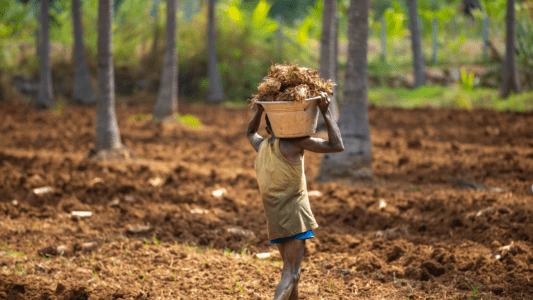
Dalit Bandhu Study
Understanding the impact of redistributive government policy on group-level inequality and inter-caste relations in…
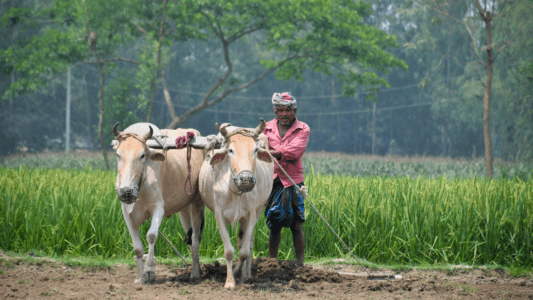
Quantitative Survey in Village Panchayats of Gujarat and Madhya Pradesh
A large-scale household survey examining rural livelihoods, governance, and community participation in village panchayats….
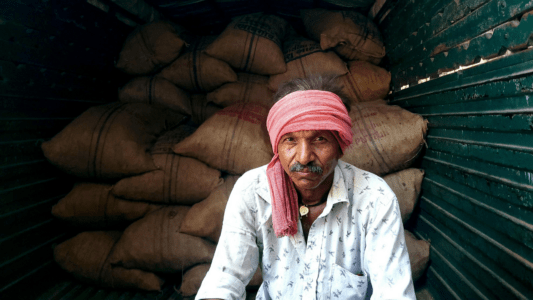
GST Tax Practitioner’s Survey
Understanding the needs of tax practitioners in navigating GST requirements for compliance outcomes….
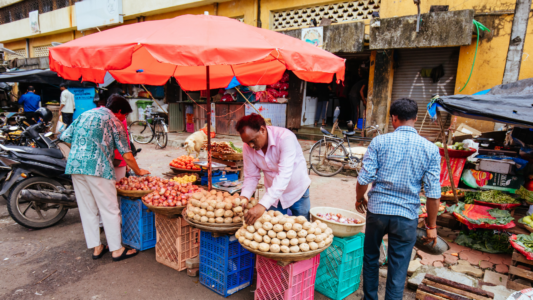
Perception of Business Environment and Commercial Contexts | A Business Survey
Understanding how small and medium retailers perceive their political and policy context….

Rice Price Volatility Across Interstate Markets
How rice farmers navigate the realities of market volatility to secure returns….
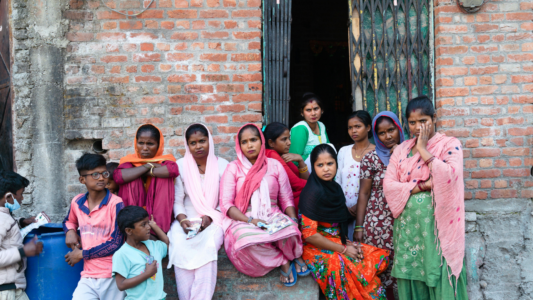
Cognitive Consequences of Social Media-Induced Insecure National Belonging
Examining identity, belonging, and perception in West Bengal…
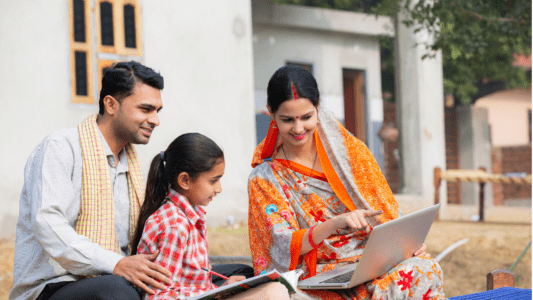
Households, Information Diffusion, and Gender
Understanding decision-making dynamics within couples…
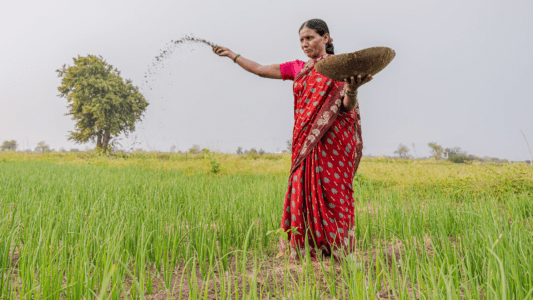
Rapid Need Assessment on Gender Integration in BRLP-JEEVIKA
Understanding gender in Bihar's livelihood programme….
Careers
DIA offers a range of career opportunities across the full research pipeline, from data management and field enumeration to project oversight, research design, and analysis. Whether you’re just starting out or bringing years of experience in development research, DIA provides hands-on exposure to high-stakes, real-world projects. We invest in the academic and professional growth of our team through mentorship, training, and close collaboration, and believe making sure that our researchers are supported by working at the intersections that they are most passionate about.
Capabilities
DIA brings together a wide range of research methodologies and technical approaches to meet the specific demands of each engagement. Our capabilities span data analytics and policy research, rigorous impact evaluation using RCTs and quasi-experimental designs, comprehensive monitoring, evaluation and learning (MEL) systems, evidence-informed programme design and strategy, and qualitative research grounded in behavioural insight. Whether the need is econometric modelling, a Theory of Change, or ethnographic fieldwork, our team combines statistical rigour with deep contextual understanding. This range allows DIA to support partners at every stage, from early-stage design through implementation and scale-up.
Partners
Over the years, DIA has built lasting working relationships with universities, government bodies, multilateral institutions, foundations, and implementation partners across India, Nepal, and Bangladesh. Our partners include leading global academic institutions, private sector partners, philanthropic leaders, governments at the national and state level, international multilateral impact organisations and not-for-profit implementation and civil society leaders.













Updates
Find out more about what we’re doing.
-
DIA Staff Summit 2026
EventDate | 2026-04-28Venue | Kathmandu, NepalThe 4th DIA Staff Summit was held in Kathmandu, Nepal (28th-30th April), bringing together the entire DIA family – Field Teams and Researchers to Data Specialists, HR, Operations, and Leadership. This year’s summit – “Connecting Field Research to Policy: From… -
From DAI to DIA | Celebrating 6 Years and a New Name
Blog PostWhen we began our journey 6 years ago, we were driven by a simple conviction: that good research — ethical, rigorous and empathetic research — has the power to change the decisions that affect the lives of the billions of people living in developing nations who will be the engines driving our future. Over these […]