Imagine stepping out for your weekly grocery run. You have a list on your phone, a tight schedule, and your biggest worry is Forgetting the bags into the car before it starts raining.
For most urban consumers, weather is an inconvenience. But for millions in rural India, a sudden downpour or an extreme heatwave can trigger crippling business losses, food insecurity, and malnutrition. Climate change is reshaping India’s food system, disrupting the markets and supply chains that connect farmers to consumers. Heatwaves wilt vegetables before they reach consumers. Intense rainfall cuts off villages from markets. Cyclones disrupt transport networks, while erratic seasons make food prices increasingly volatile. Much of the debate around climate adaptation focuses on what happens on the farm. But there is another, largely invisible frontline: the rural markets where millions of Indians buy and sell food every week.
CC DIA Evidence and Impact
While global climate policy frequently focuses on big agriculture and supply chains, the actual retail hubs where rural communities buy their food are often ignored. These markets connect farmers with consumers and determine whether food remains affordable, nutritious, and available after it leaves the farm.
Structured prompt engineering on Google Scholar (with some help from AI ofcourse) reveals that there are upwards of 18000 published studies on research in agri-food, nutrition, agriculture, agri-supply chain dynamics etc in India, however close to 6000 published studies exist on the retail side of it. Most papers on the retail side deal with supermarkets in urban areas and connecting rural producers to urban consumers.
Rarely do we find research on rural markets, their nutritional diversity/capabilities and the problems they tackle. This implies that rural markets remain poorly understood which makes it difficult to identify critical vulnerabilities in India’s food system in an era of climate change.
Why should anyone care about rural markets?
Rural retail markets are the frontline where climate shocks are translated into food security shocks. Heatwaves accelerate food spoilage, heavy rainfall disrupts transport, flooding damages market infrastructure, and erratic weather affects the availability and prices of fresh produce. These disruptions reduce farmers’ incomes, increase traders’ losses, and restrict consumers’ access to affordable, nutritious food.
These markets serve a large share of rural India, home to over 833 million people, or nearly 69% of the country’s population according to the 2011 Census.
And so, places are where climate change is ultimately experienced by millions of households.
Yet, despite their central role in India’s food system, rural retail markets remain one of its least understood components. This knowledge gap threatens the livelihoods of producers and retailers, undermines the nutritional security of consumers, and creates bottlenecks that ripple back through agricultural supply chains, distorting production incentives and weakening the resilience of the food system as a whole.
The reality of rural markets: The case of Keonjhar’s Haats
To understand what climate resilience looks like at the retail end of India’s food system, the field team from DIA Evidence & Impact, studied the weekly haats of Keonjhar district in Odisha. While every rural market has its own characteristics, Keonjhar offers a compelling window into the opportunities and vulnerabilities that define many rural markets across India.
Keonjhar district presents a striking paradox. Rich in forests and mineral resources supplies a massive share of India’s iron ore. Yet, it faces severe economic challenges, ranking as the 8th poorest district in Odisha with a 41.78% headcount ratio on the national Multidimensional Poverty Index. It is also home to a large indigenous tribal population, including highly vulnerable communities like the Juanga tribe.
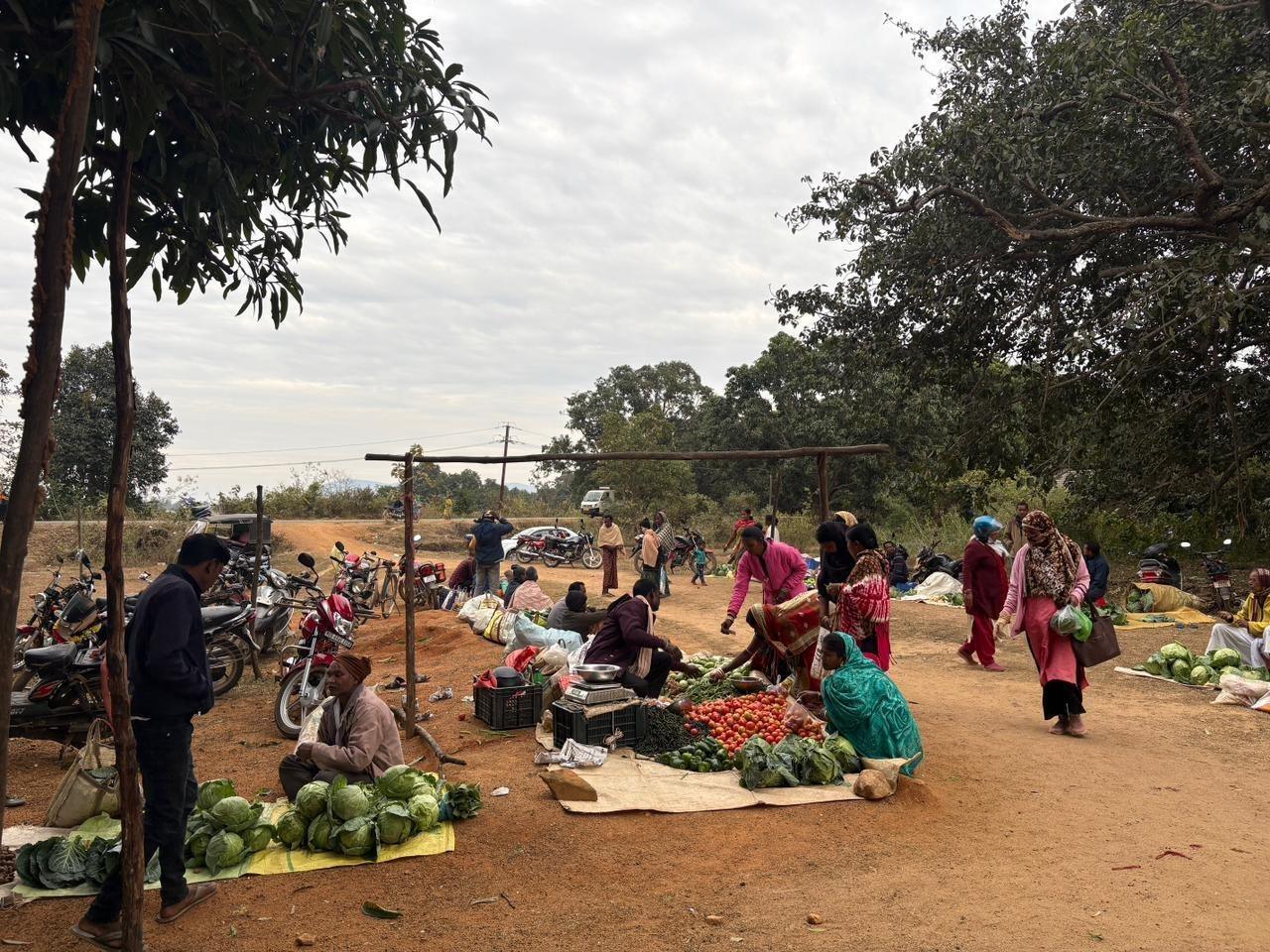
At the heart of economic life, there are haats, vibrant, open-air weekly markets. They can host anywhere from 5 vendors in small villages to over 100 in larger administrative block headquarters. They sell a variety of goods ranging from fresh fruits and vegetables, meat, fish, alcohol to clothes, groceries and agricultural implements. The markets are sustained by three broad categories of vendors. Farmers participate occasionally, selling seasonal produce and wild-foraged products from nearby forests. Farmer-traders combine produce from their own farms with goods purchased from wholesalers or intermediaries, allowing them to maintain a more regular presence in the market. Traders, in contrast, operate as dedicated retailers, sourcing all their goods from wholesale markets and attending every market day. Together, these actors form the backbone of the local food system, ensuring a steady flow of food and essential goods across the district.
Despite being lifelines for local nutrition, these haats suffer from severe infrastructure deficits. Most are completely open to the elements. Permanent roofs or raised concrete platforms are rare or derelict. There is little to no lighting, waste disposal is virtually nonexistent, and running water or functional toilets are missing entirely. Furthermore, while vendors pay a mandatory “sitting fee” to local market management committees, it is rarely clear how those funds are reinvested. This disconnect between local revenue collection and infrastructure provision limits the ability of markets to adapt to climate risks. Improving physical infrastructure is therefore only part of the solution; strengthening institutions responsible for managing these spaces is equally essential if rural markets are to become resilient in an era of climate uncertainty.
Mapping the System Through Local Eyes
Understanding climate resilience requires more than documenting infrastructure gaps, it requires understanding how the people who depend on these markets experience and respond to climate risks. To capture these perspectives, we spent months in Odisha and Bihar conducting Focus Group Discussions (FGDs) with separate groups of men and women, bringing together farmers, traders, and consumers to discuss the challenges they face and the changes they believe would make the greatest difference.
Rather than treating these issues in isolation, we adopted a systems dynamics approach and worked with participants to co-create Causal Loop Diagrams (CLDs). These diagrams map the relationships between different parts of the market system, revealing how one problem can trigger a cascade of others. For example, inadequate drainage during heavy rainfall not only floods market spaces but also damages produce, reduces vendor incomes, discourages consumers from visiting, and ultimately affects household access to fresh food. Similarly, extreme heat without adequate shelter accelerates spoilage, increasing food waste and financial losses while reducing the availability of nutritious produce.
This participatory approach shifted the focus from identifying isolated problems to understanding the interconnected nature of climate vulnerability.
More importantly, it ensured that the priorities identified were grounded in the lived experiences of the people who buy, sell, and depend on these markets every week.
What climate change feels like inside a haat
The experiences captured through the qualitative assessment also show that climate vulnerability does not look the same across rural markets. While Keonjhar provides the central case for understanding how climate risks affect haats in Odisha, qualitative fieldwork in Bihar illustrates how local geography and infrastructure can shape very different forms of disruption.
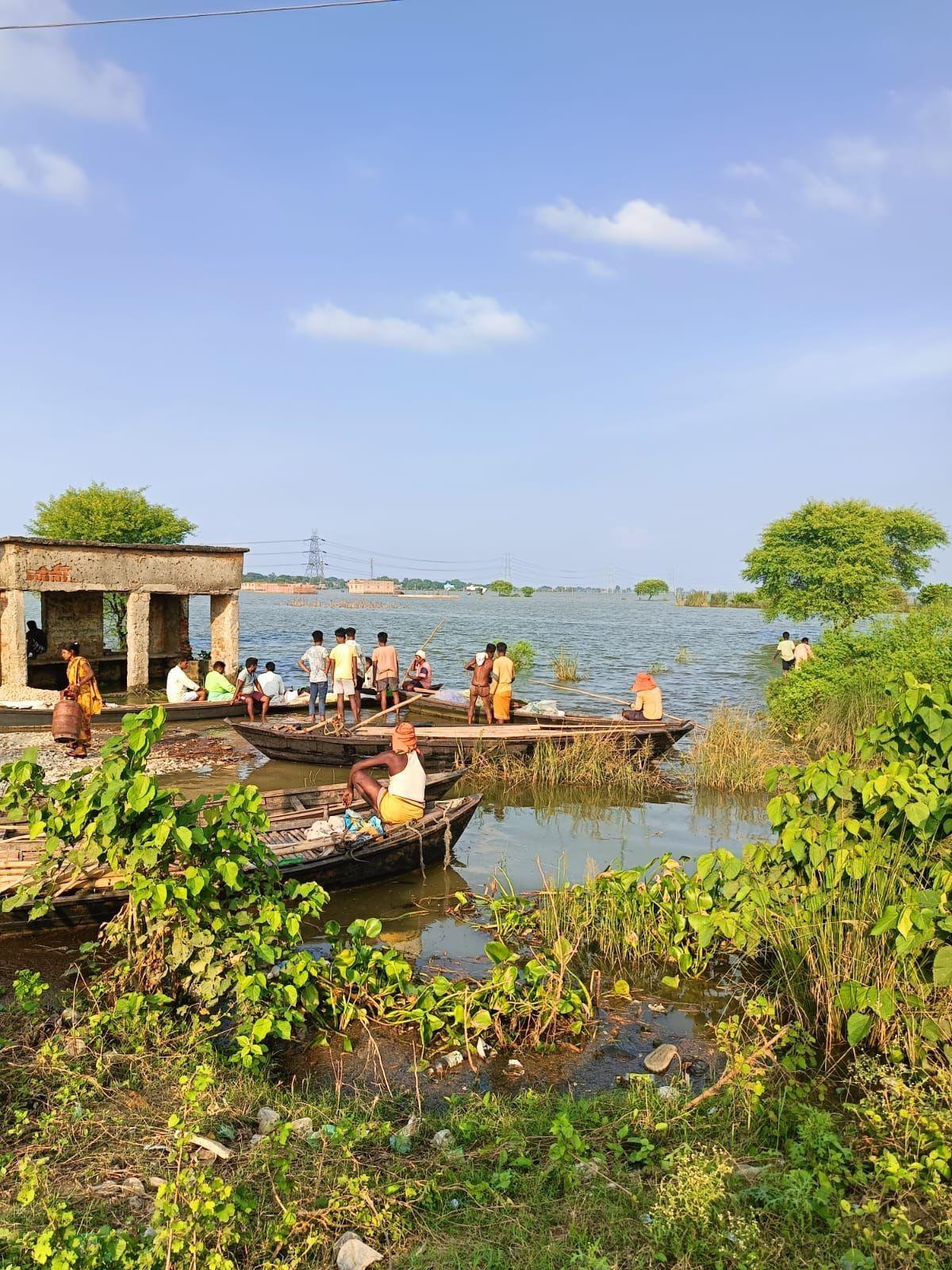
For vendors and consumers, climate stress is not an abstract future risk. It changes the basic experience of going to market. During the monsoon, heavy rainfall, waterlogging and poor road connectivity can make markets difficult to reach. Some vendors miss market days altogether when roads become impassable, while consumers may stay away when market spaces become muddy, dirty and difficult to navigate. Footfall can fall, shortening an already fragile chain between producers, vendors and consumers. As one vendor noted, “people avoid coming when the road gets flooded; it becomes slippery and dirty everywhere.”
The disruption is not the same everywhere. In Sonversha haat in Bhojpur district Bihar, heavy rainfall can leave the roads leading to the market waterlogged and inaccessible for several days, with market visits resuming only once the water recedes. In Janki Bazar, also in Bhojpur, access is shaped by the rising waters of the Ganga. The haat is located across the river and is normally reached through a floating pontoon bridge. When the river rises significantly, the bridge is removed and residents must rely on boats to cross. For those who depend on the haat, these seasonal disruptions can turn a routine journey to market into a significant logistical challenge.
Inside the market, the effects continue. Poor drainage can leave stagnant water around stalls, creating slippery surfaces, foul smells and conditions that make it difficult for vendors to even sit and sell. One vendor described the experience simply: “Sometimes we can’t sit in our place; it becomes too dirty and slippery.” Waste management systems are often inadequate, making these conditions worse. For vendors selling fresh and perishable foods, the problem is not only discomfort. Moisture, heat and poor storage can accelerate spoilage, reducing the quantity and quality of food available for sale.
The Toilet Paradox: Why Infrastructure Fails Without Trust
So, what would make these markets more resilient? We asked the locals to move beyond describing the problems and identify the changes they believed would make the greatest difference, weighing both the potential benefits and the feasibility of each intervention.
Across all groups, there was broad agreement on the fundamentals. Permanent roofs, raised concrete platforms, improved transport connectivity, drainage, and better lighting were consistently identified as priorities for making markets more resilient to extreme weather. One finding, however, stood out. While we expected women to rank public toilets among their highest priorities given the disproportionate health, safety, and dignity burdens they face, the opposite was true. Women consistently ranked toilets lower than men.
The explanation had little to do with the importance of sanitation and everything to do with trust in public institutions.
Participants explained that government-built toilets frequently become unusable within a short period due to the absence of reliable water supply, sewerage connections, and routine maintenance. In their experience, constructing another toilet without addressing these underlying failures would simply create another abandoned structure.
This scepticism echoes evidence from Odisha, where a large randomised controlled trial by Clasen et al. (2014) found that constructing household latrines, in isolation, led to only modest increases in latrine use and limited improvements in health outcomes. At the same time, evidence from Duflo et al. (2015) shows that sanitation investments can substantially reduce exposure to faecal contamination and improve public health when they are supported by reliable water supply, maintenance, complementary infrastructure, and sustained community adoption.
The lesson extends far beyond toilets. Climate adaptation cannot be reduced to building physical assets alone. Infrastructure is only as resilient as the institutions that maintain it and the systems that enable people to use it. The women of Keonjhar recognised this intuitively. Their priorities reflected not a rejection of sanitation, but a demand for investments that are functional, maintained, and capable of delivering lasting benefits rather than short-lived infrastructure.
Grounding Climate Policy in Local Realities
As climate change intensifies, building resilient food systems will require looking beyond farms to the rural markets where food reaches consumers and livelihoods are sustained. Strengthening these markets is not simply about investing in physical infrastructure; it is about understanding how climate risks interact with local institutions, governance, and the everyday realities of farmers, traders, and consumers.
India spends nearly ₹2.3 lakh crore annually on food security (PRS Legislative Research, 2026). As climate change intensifies, however, ensuring food security will require looking beyond agricultural production to the markets where food ultimately reaches consumers. Rural haats are the frontline where climate shocks translate into livelihood losses, food price volatility, and nutritional insecurity.
The findings from these markets show that effective climate adaptation cannot be designed from the top down. Solutions that appear obvious on paper may fail when they overlook local priorities, lived experiences, and institutional realities. Building resilient markets therefore requires not only investment, but a better understanding of how these markets function and how the people who depend on them experience change.
As India strengthens its response to climate change, ensuring that policy is informed by the realities on the ground will be just as important as the investments themselves. As climate change reshapes India’s food system, resilient markets will be just as important as resilient farms. Building them begins not with assumptions, but by listening to the communities that depend on them.
References:
- Clasen, T., Boisson, S., Routray, P., Cumming, O., Jenkins, M. W., Ensink, J. H. J., Bell, M., Freeman, M. C., Peppin, S., & Schmidt, W.-P. (2014). Effectiveness of a rural sanitation programme on diarrhoea, soil-transmitted helminth infection, and child malnutrition in Odisha, India: A cluster-randomised trial. The Lancet Global Health, 2(11), e645–e653. https://doi.org/10.1016/S2214-109X(14)70307-9
- Duflo, E., Greenstone, M., Guiteras, R., & Clasen, T. (2015). Toilets can work: Short and medium run health impacts of addressing complementarities and externalities in water and sanitation (NBER Working Paper No. 21521). National Bureau of Economic Research. https://doi.org/10.3386/w21521
- Food and Agriculture Organization of the United Nations, International Fund for Agricultural Development, United Nations Children’s Fund, World Food Programme, & World Health Organization. (2018). The state of food security and nutrition in the world 2018: Building climate resilience for food security and nutrition. FAO.
- High Level Panel of Experts on Food Security and Nutrition. (2017). Nutrition and food systems. Committee on World Food Security.
- PRS Legislative Research. (2026). Demand for grants 2026–27: Food and Public Distribution. https://prsindia.org/budgets/parliament/demand-for-grants-2026-27-analysis-food-and-public-distribution
- Registrar General & Census Commissioner, India. (2011). Census of India 2011: Rural–urban distribution of population. Government of India. https://censusindia.gov.in/
- Press Information Bureau. (2013, July 15). Census 2011: Rural–urban distribution
Author’s Note
This article draws on experiences and insights from the field work conducted in haats of Bihar and Odisha as a part of INFUSION (Indian Food Systems for Improved Nutrition) project led by the University of Sheffield and supported by DIA Evidence & Impact. The project combines systems thinking, participatory research, and policy engagement to understand how India’s food systems can become more resilient, equitable, and nutrition-sensitive in the face of climate change.
Acknowledgements
We are grateful to the PIs of the INFUSION project; Dr. Bhavani Shankar, Dr. Gregory Cooper, Dr. Martin Watts, and Dr. Anjali Purushottam and to our colleagues at DIA Evidence & Impact; Allen Francis, Pronoy Sarkar, Sreelekha S, and Manas Samanta for their contributions, discussions, and support in the work that informed this article. We are also grateful to the farmers, traders, consumers, and communities who shared their experiences and perspectives with us.
About the Authors
Shreyansh Dwivedy is a former Research Associate at DIA Evidence & Impact, with research interests in food systems, public service delivery, and development economics.
Abha Indurkar is a Manger-Research Policy & Communications at DIA Evidence & Impact, where her work focuses on international development, and public policy.